If you’re in your 40s, 50s or beyond, you’ve probably heard that strength training is good for your bones. You may also have pictured a busy gym, heavy barbells and a lot of people who seem to know exactly what they’re doing. For many women, that picture is enough to put the whole idea off.
The good news is that looking after your bones isn’t about walking into an intimidating gym. It’s about giving your body the right kind of challenge, progressively and safely, with someone who knows how to adjust it for you.
This article explains why bones respond to load, why Pilates on its own may not be enough, and how a supported approach can help you build strength with confidence. It’s general information, not medical advice. If you’ve been diagnosed with osteopenia or osteoporosis, speak with your doctor before starting a new program.
Why bone health changes after 40
Bone is living tissue that is constantly being broken down and rebuilt. Through our 40s and 50s, and especially around menopause as oestrogen declines, that balance can shift so that bone is lost faster than it’s replaced. Muscle mass also tends to decline with age unless we actively work to keep it.
The tricky part is that you can’t feel your bones getting weaker. There’s usually no pain and no warning sign. That’s why many women only start thinking about bone health after a scan, a fall or a fracture.
What bones actually respond to
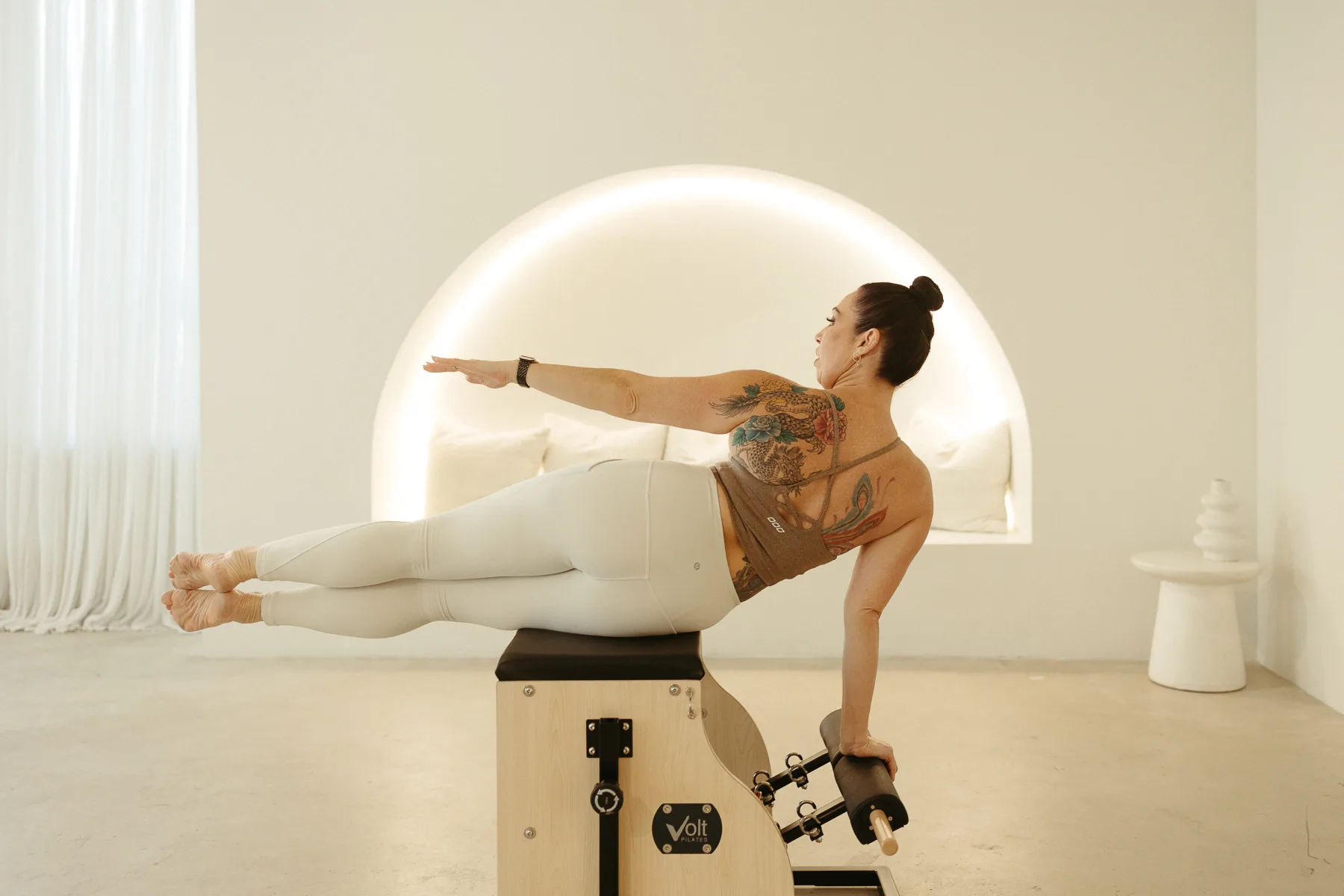
Bones adapt to the demands we place on them. Australian guidance, including from Healthy Bones Australia and the Better Health Channel, points to three types of exercise working together:
- Resistance training that gradually increases over time
- Weight-bearing exercise done on your feet
- Balance training to help reduce the risk of falls
One of the best-known studies, the LIFTMOR trial from Griffith University, found that eight months of supervised, progressive resistance and impact training improved bone density at the spine and hip in postmenopausal women with low bone mass. The key words are supervised and progressive: the women were coached carefully and built up gradually.
Is Pilates enough on its own?
Pilates is excellent for strength, control, posture and balance, and it helps many people move with more confidence. But it’s worth being honest about the research. A 2021 review of Pilates and yoga found no significant improvement in bone density compared with control groups, although the authors noted that maintaining bone density after menopause is itself worthwhile. The studies are small, so there’s still a lot we don’t know.
What this suggests is that Pilates works best for bone health when it’s combined with progressive load. That doesn’t have to mean heavy barbells. It means adding resistance, whether from springs, free weights or your own body weight, and gradually increasing it as you get stronger.
Why you don’t need an intimidating gym
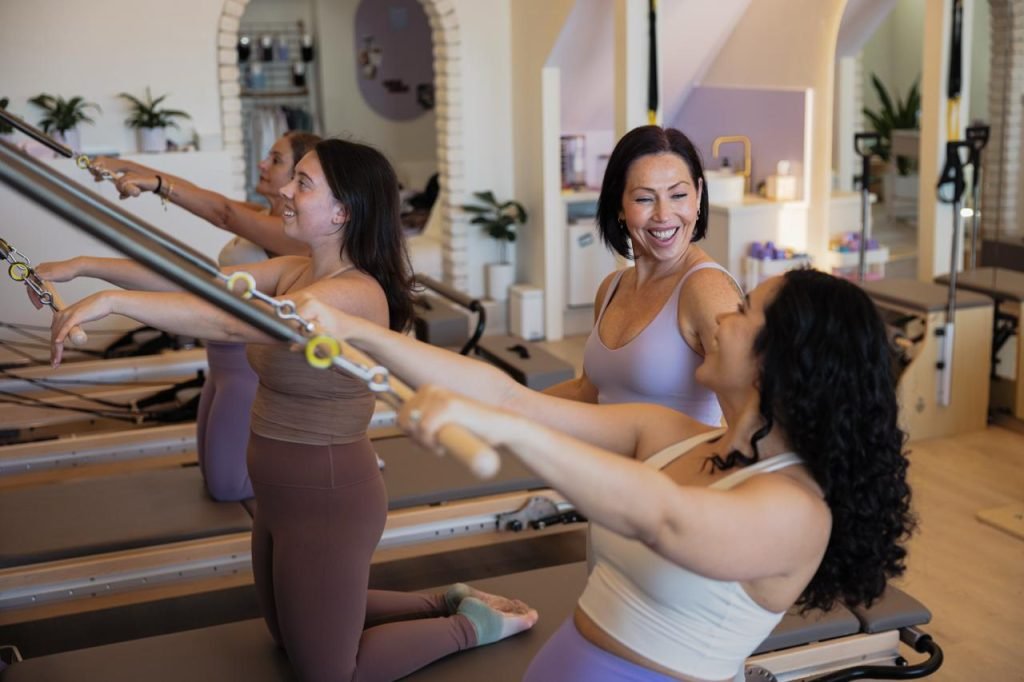
The thing that makes strength training work isn’t the setting. It’s that the load is right for you, your technique is good, and the challenge increases over time. That’s much easier to achieve in a small, supported environment than in a busy gym where you’re working things out on your own.
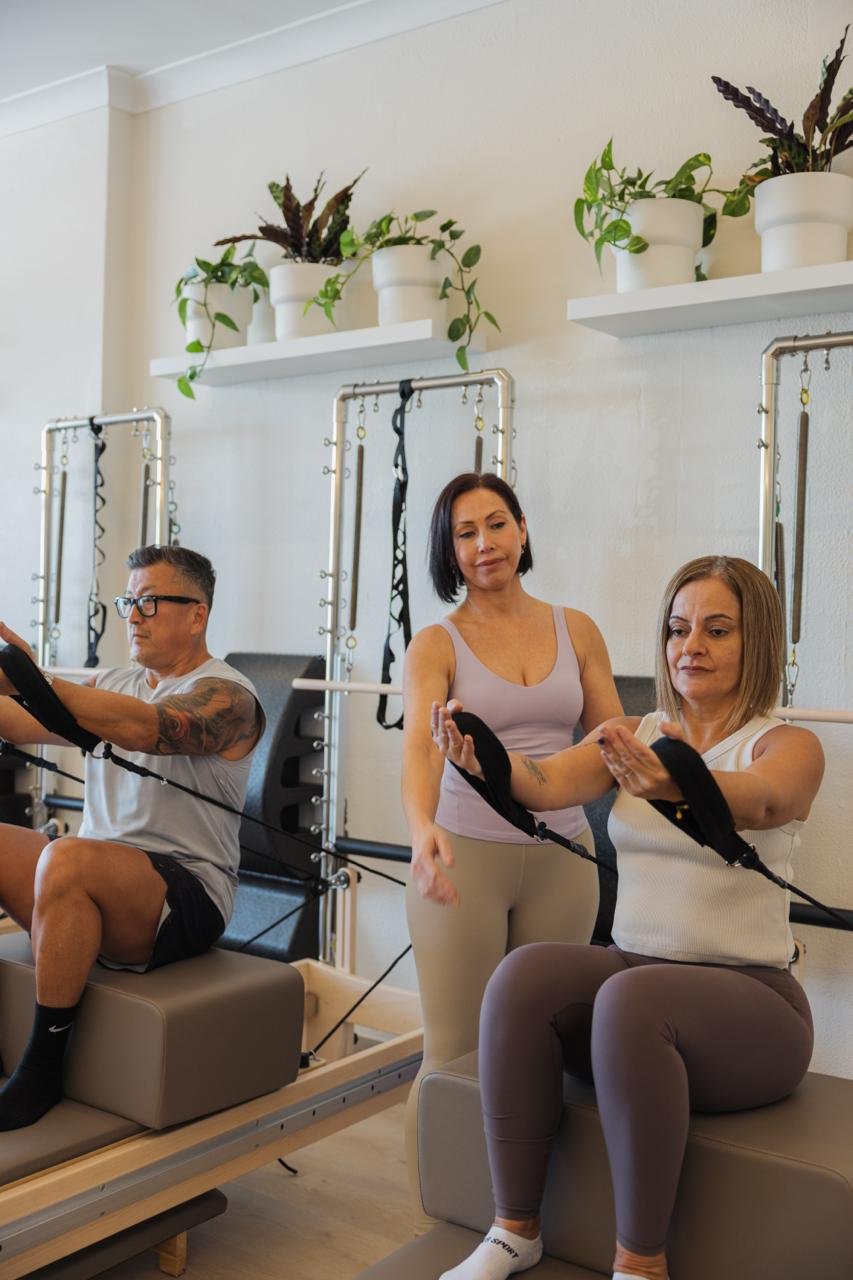
In a small class or one-to-one session, an instructor can:
- Choose a starting weight that challenges you without overloading you
- Check your form so the effort goes where it should
- Adapt exercises if you have a sore back, knees or shoulders
- Progress you gradually so you keep getting stronger
- Include balance work, which matters just as much for reducing fall risk
It also means you’re surrounded by women at a similar stage of life, rather than feeling like the odd one out.
How Stronger Bones works at Parkside
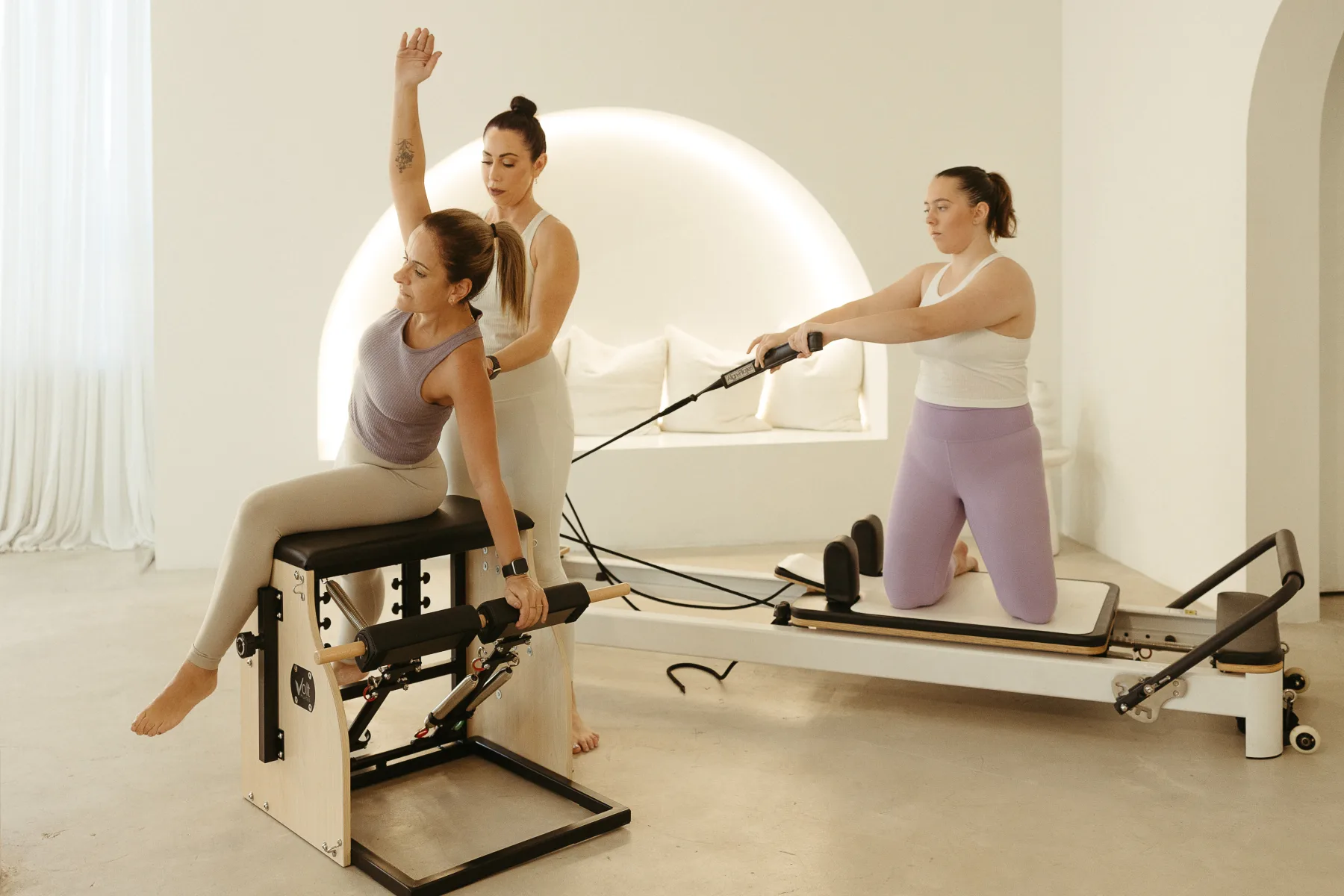
Our Stronger Bones classes were designed with physiotherapists and exercise physiologists to support muscle and bone health. They combine Pilates spring resistance with added weights for load-bearing work, in a progressive four-week program.
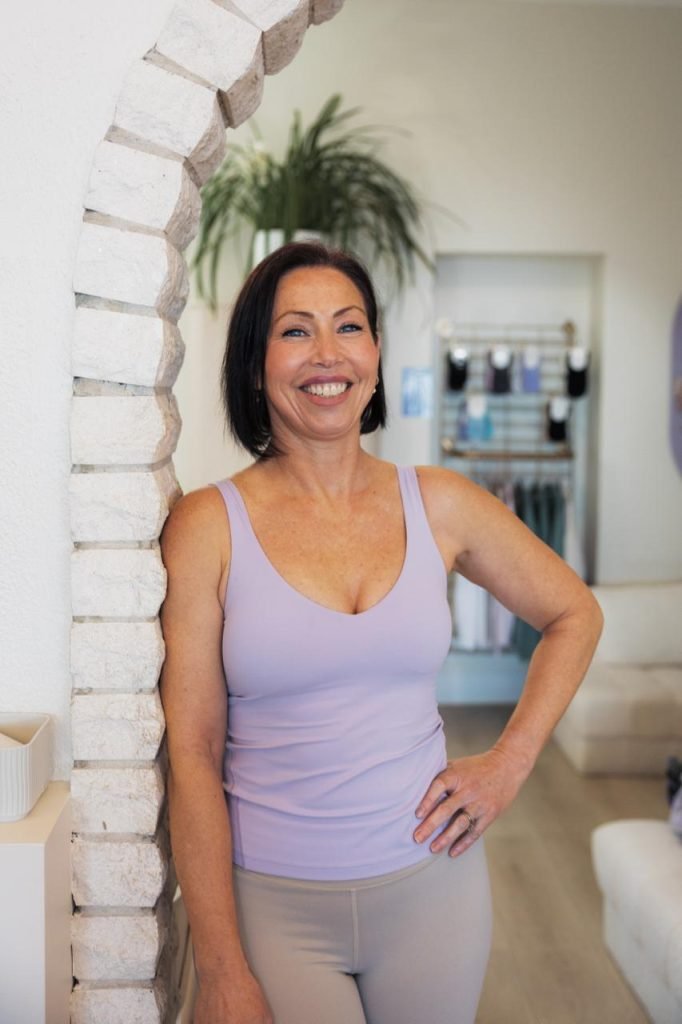
You don’t need to be fit or experienced to start. Renee, Parkside’s founder, has more than 26 years in the movement industry and is navigating these changes in her own body too, which is a big part of why she created the program. Classes are small, so your instructor knows your name, your goals and anything that needs adjusting.
If you’d prefer more individual attention to begin with, a private or semi-private session is a good way to learn the foundations before joining a class.
Common questions
Is it safe to lift weights if I have osteoporosis?
For many people, supervised and progressive strength training is part of a recommended approach, but it needs to be tailored. Check with your doctor first, and let your instructor know about your diagnosis so they can adjust exercises such as loaded forward bending and twisting.
How often should I train for bone health?
Australian guidelines generally suggest resistance training two to three times a week, alongside regular weight-bearing activity and balance work. Consistency over months matters more than any single session.
I’ve never lifted weights. Where do I start?
Start lighter than you think and focus on technique. A small group or private session is the easiest way to learn safely and build confidence.
Start building strength in Earlwood
If you’ve been meaning to look after your bone health but didn’t know where to begin, we’d love to help. Explore our introductory offer for new clients, or book a free 15-minute call with Renee to talk through your goals and find the right starting point.
You may also like: Pilates for healthy ageing and Pilates for perimenopause and menopause.