Healthy ageing is not about doing less. It is about moving in ways that help you stay capable, confident and connected to the life you enjoy. For many people, that means maintaining the strength to carry shopping, the balance to navigate uneven ground, the mobility to reach and bend comfortably, and the confidence to keep saying yes to everyday activities.
At Parkside Pilates in Earlwood, we see Pilates as a practical way to support those goals. The method can be adapted to your experience, movement history and changing needs, making it a welcoming option whether you have exercised for years or are returning after a long break.
Why movement matters as we get older
Our bodies continue to respond to purposeful movement at every age. Current Australian movement guidelines for adults aged 65 and over recommend a combination of aerobic activity, muscle-strengthening work and functional activities that challenge mobility, balance and coordination. No single class needs to do everything, but a well-rounded weekly routine should give each of these qualities attention.
Pilates can be a valuable part of that routine because it brings strength, control, balance, breathing and body awareness together. Research reviews have also found that Pilates programs may improve balance and several measures of physical function in older adults. It is not a cure-all or a replacement for medical care, but it can be a useful, enjoyable form of regular exercise.
How Pilates can support healthy ageing
1. Strength for real life
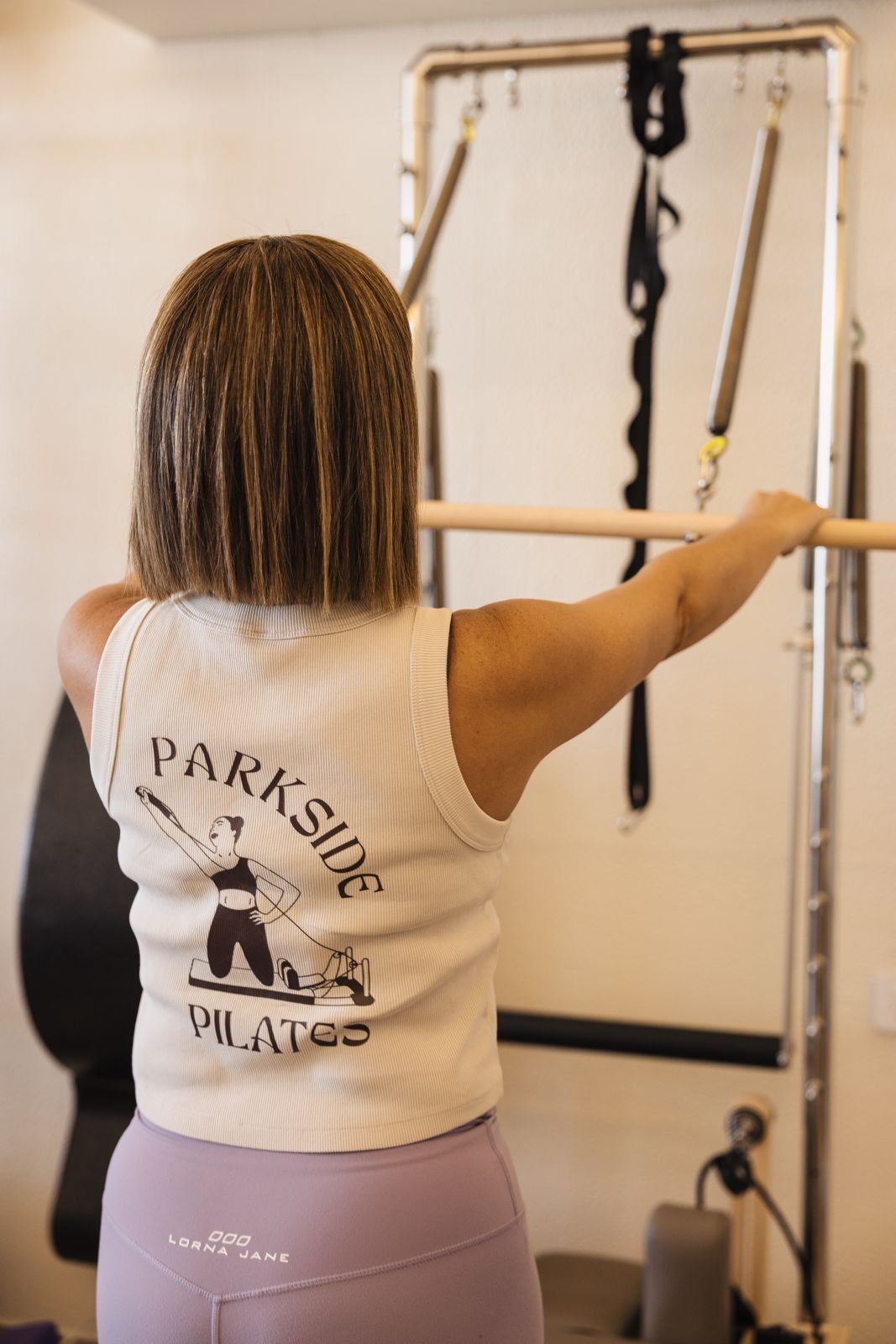
Pilates is sometimes mistaken for stretching alone. In reality, the springs on the Reformer, Tower and Chair create resistance that your muscles must control. Thoughtful programming can challenge the legs, hips, back, shoulders and core while allowing the teacher to adjust the exercise to suit you.
This strength has a purpose beyond the studio. Standing up from a chair, climbing stairs, carrying bags and getting down to the floor all ask your body to produce and control force. Building strength progressively can make those daily tasks feel more manageable.
2. Balance and coordination
Balance is not one fixed skill. It relies on strength, joint mobility, vision, sensation and the brain’s ability to organise movement. Pilates exercises often ask you to control your body while the position, support or resistance changes. Depending on your level, this might begin with stable seated or lying exercises and progress to supported standing work.
The goal is never to make an exercise unstable simply for the sake of difficulty. It is to provide the right amount of challenge so you can practise safely and build confidence over time.
3. Mobility with control
Useful mobility is more than reaching a large range of movement. It is being able to move through an appropriate range with control. Pilates combines mobility and strength, helping you explore movement while staying connected to your alignment and breath.
That may mean improving how your spine moves, creating more freedom around the hips and shoulders, or simply feeling less guarded during everyday movement. Progress is individual, and consistency matters more than forcing a particular shape.
4. Posture and body awareness
There is no single perfect posture that everyone should hold all day. What often helps is having options: the ability to recognise your position, shift it when needed and organise your body efficiently for the task in front of you.
Pilates encourages that awareness. With clear cues and feedback from the equipment, you learn to notice how you distribute weight, where you hold unnecessary tension and how breath can support movement.
5. Confidence to keep moving
One of the most meaningful benefits of a supportive exercise environment is the confidence it can build. Learning a new exercise, noticing that you feel steadier or doing something that once seemed intimidating can change how you see your own capacity.
At Parkside, progress is not measured by keeping up with the person beside you. It is measured against where you started and what matters to you.
What about bone health?
Bones respond to appropriate loading, which is why progressive resistance exercise is an important part of supporting bone health. Balance work is also valuable because it can address factors associated with falls risk. Pilates can contribute to a broader bone-health plan, particularly when equipment and weights are used with suitable progression.
However, not every Pilates exercise provides the same bone-loading stimulus, and some movements may need modification for people diagnosed with osteoporosis or at higher fracture risk. Our Stronger Bones program combines spring resistance and weights in a supportive small-group setting. If you have osteoporosis, a previous fracture or another medical concern, speak with your healthcare professional before starting and let your teacher know.
Why small classes make a difference
Good instruction becomes increasingly important when you are managing an injury, returning to exercise or simply want to understand what you are doing. In a smaller class, the teacher has more opportunity to observe your movement, explain the intention of an exercise and offer an appropriate variation.
Parkside offers several ways to move, including small group Pilates classes, semi-private sessions and one-to-one Pilates. The best starting point depends on your goals, confidence and any health considerations—not your age alone.
How often should you do Pilates?
There is no universal perfect number. One well-guided session each week can be a realistic starting point, especially if you are also walking, strength training or doing other activities. Two or more sessions may help you practise skills and build momentum more quickly, provided the overall program suits your capacity and recovery.
The most effective routine is one you can sustain. A thoughtful conversation about your goals is more useful than choosing a schedule based on what someone else is doing.
Frequently asked questions
Am I too old to begin Pilates?
No. Pilates exercises can be adapted in position, resistance, range and complexity. What matters is choosing an appropriate class and telling your instructor about relevant health conditions, injuries or recent changes.
Do I need to be flexible?
Not at all. Flexibility is not an entry requirement. Pilates can help you work on mobility gradually while also building the strength to control your available range.
Is Reformer Pilates suitable for beginners?
It can be. The Reformer is adjustable and provides both support and resistance. A beginner-friendly class, semi-private session or private appointment can help you learn the equipment at a comfortable pace.
Can I attend if I have osteoporosis or an injury?
Possibly, but the right format and modifications matter. Seek clearance from your treating health professional when appropriate, share relevant information with your instructor and consider a private or semi-private starting point if you need more individual attention.
Start where you are
You do not need to feel fit, flexible or coordinated before beginning. You only need a starting point that feels appropriate and support that respects your body.
If you are looking for Pilates for healthy ageing in Earlwood or Sydney’s Inner West, talk to the Parkside team. We can help you choose a class or session that supports the way you want to move now—and for the years ahead.